
Tracing Former Owners of a Price County Property
Former owners of a Price County parcel appear as grantor or grantee on successive instruments. Read the deeds from newest to oldest. Check the legal description at every step. The computer index starts at September 1951. Anything earlier needs the Register of Deeds' grantor, grantee, and tract indexes. Those are held in the office. Plat books, library material, and court files can untangle a name. But the deed itself confirms the transfer.
Build the timeline one transfer at a time. Each grantee points to an older deed where that party first received the tract. Pull dates, parties, and references straight from the actual instruments. No sample chain is assumed here, because every parcel carries its own history.
| Transfer Date | Grantor → Grantee | Deed Type | Book/Page or Index Reference |
|---|---|---|---|
| Most recent transfer | Parties named on the latest deed | Instrument type shown in the record | Copy the county reference |
| Earlier acquisition | Earlier grantor → the latest deed’s grantor | Instrument type shown in the earlier record | Copy that deed’s reference |
| Each preceding transfer | Earlier grantor → the grantee carried back from the next row | Read from the recorded instrument | Retain the book, page or index ID |
Price County’s historical coverage affects where each row can be found:
| Source | Years It Covers | Where Held | What It Shows |
|---|---|---|---|
| Computer-searchable deed index | September 1951 forward | Register of Deeds public access | Recorded parties and instrument references |
| Older grantor, grantee and tract indexes | Before September 1951; exact span not stated | Register of Deeds office copies | Earlier name and land references |
| Deed books and recorded maps | Consult the office for the relevant period | Register of Deeds | Instrument text and legal descriptions |
| Historic plat-book sheets | Scanned Price County township and range pages | Wisconsin Historical Society | Land and map context, not a deed chain |
Begin online for deeds at or after the indexed cutoff. Earlier transfers lead back to office-held indexes and their book references. Historic plats and local histories sharpen the trail. Confirm each transfer in the record itself. The Price County Register of Deeds page states the computer-index cutoff and points to the office that holds the earlier deed indexes.
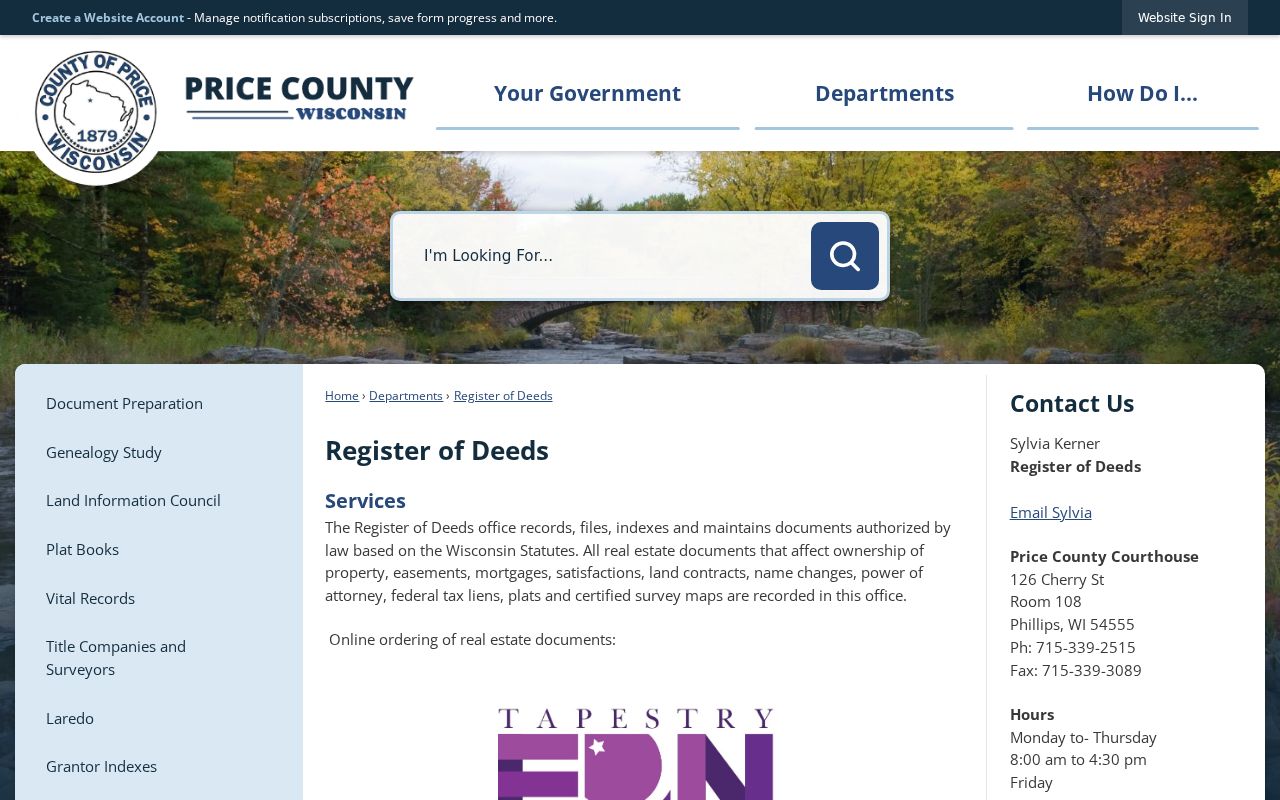
The online trail has an end. That boundary explains why a deed-book search through the older indexes may be needed to finish the chain.
Legal Descriptions Keep a Price County Former Owner Search on One Tract
Old deeds describe land differently. A deed may name a township, range, section, or lot instead of a street address. A misspelled surname can also sink a name-only search. Compare the tract description and the party roles. That comparison shows whether two entries concern the same land, and the legal description ties a deed to a parcel far more reliably than any mailing address.
Keep each reference with its date and parties. Price County's tract indexes help when a surname changes. When a parcel was divided or re-described over time, a certified survey map or plat may explain the change, and the Register of Deeds records those instruments as part of the land history.
A Parcel Split Can Change the Chain for Price County Former Owners
A modern parcel may cover only part of the land named in an older deed. Watch for a different lot, section, or tract description. Recorded plats and certified survey maps show where the land was divided or reorganized. That map record explains a gap. A search using today's PIN will not return every earlier owner reference.
Carry the older description into the next tract-index search. Then compare it with the present parcel. A map connects the descriptions. The deed still establishes the transfer and its parties, so keep the map reference beside the timeline rather than treating the map alone as proof of ownership.
Price County Plat Books Help Trace Former Owners
The Wisconsin Historical Society has digitized Price County plat-book sheets arranged by township and range. These maps tie older land descriptions to a place and can surface a name or locality worth chasing through the deed indexes. They do not document every transfer.
Let a plat page frame the search. Then verify the owner in a deed or tract reference. A printed map shows one point in time. Later lot divisions, easements, or conveyances may not appear.
The Historical Society's Price County plat-book collection provides the scanned sheets.
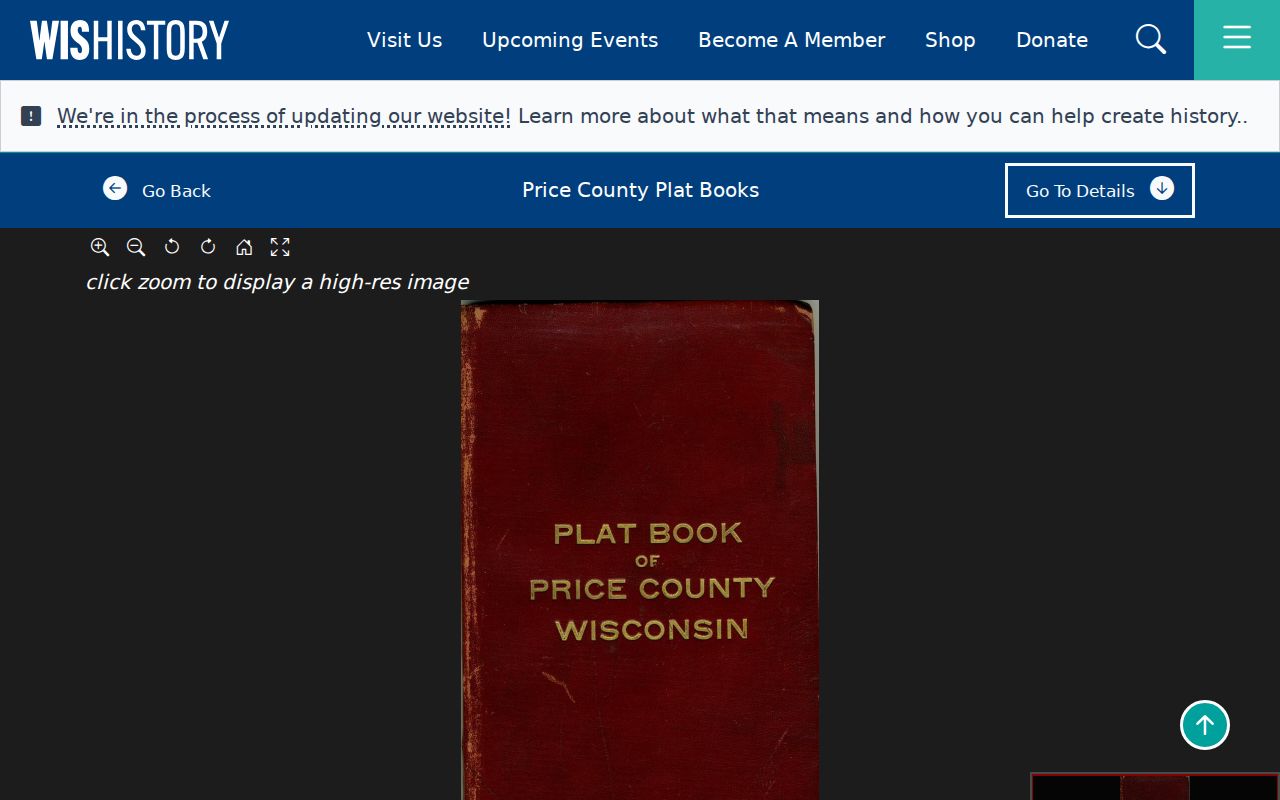
Use the map as a lead to the parcel description. Then let the deed record confirm any change in ownership.
Phillips Library Records Help Identify Price County Former Owners
The Phillips Public Library offers genealogy and history resources tied to Price County. Its links reach the Price County Historical Society and Genealogical Society. Ancestry Library Edition is free for in-library use. HeritageQuest and newspaper material round out the holdings. These tools can clarify a family name, an obituary, a local sale notice, or a historic address. For city directories, ask staff to check the catalog for a specific place and period.
A newspaper hit is not a conveyance. It can suggest the next name to search. The Register of Deeds' older indexes and deed books still confirm who received or transferred the property.
The Phillips library history page lists these resources.

Library leads work best when they settle a name or address before you turn to the county record.
Estate and Court Records Interrupt a Price County Former Owner Chain
A Price County chain does not always move through simple sales. Estates, trusts, and court-ordered conveyances appear in plenty of them. The Register of Deeds records the instrument that moved title. A probate judge, meanwhile, explains why the transfer happened at all.
Wisconsin Circuit Court Access gives statewide case-search reach, and public terminals at the courthouse offer another route. A personal representative shows up there. So does the probate order that authorized a deed. Keep the two roles separate, though.
A probate file may name every heir. That alone proves nothing about how a particular parcel passed. Read the deed first. Check its legal description and parties. Only go back to the court record when the deed itself points to a case or an estate.
A court file can explain a link in the chain. The recorded instrument still proves how the parcel moved.
Walking the Price County Former Owner Deed Chain Backward
Begin with the newest deed on the parcel. Read every transfer as a row with its own details: date, grantor, grantee, instrument type, reference number and legal description. The current owner of record is your first grantee. From there, flip each entry around. The earlier grantor becomes the next name you chase through Price County. The Register of Deeds supports this work with an online searchable index. It also holds older grantor, grantee and tract references.
- Locate the newest deed and record its grantee, grantor and legal description.
- Search the grantor as a prior grantee to find the earlier acquisition.
- Compare descriptions at each step so the chain remains tied to one tract.
- At the September 1951 cutoff, continue with office-held older indexes and deed books.
Keep each entry whole. Record the transfer date, both party names, and the book, page or index reference side by side for every Price County deed you touch. When a later instrument conveys only part of an earlier tract, save the map or survey reference. That reference explains the split. The habit leaves the next person a clear route through the deed chain. It also guards against a classic mistake. Never assume two deeds share the same land just because one surname matches.
- Grantor / grantee
- The party conveying an interest and the party receiving it.
- Chain of title
- The linked transfer records for a single parcel.
- Legal description
- The land description used to distinguish a tract across address changes.
How Far Back Price County Former Owner Records Reach Online
Online deed records in Price County stop at a hard boundary. The computer-searchable index at the Register of Deeds holds nothing recorded before September 1951. Older research still moves forward. The office keeps earlier grantor, grantee and tract-index copies and deed books. The office publishes no single earliest year for those materials. Ask directly about the time period and record reference for your parcel.
Lawful use. Use former-owner records for property history and land diligence. Do not use names or addresses to track, harass or harm a living person.