
What Price County Property Tax Records Contain
Two offices split the work. The Real Property Lister maintains the owner of record, mailing and situs addresses, PIN, legal description, special districts and the assessment roll itself. The Treasurer's public server handles bills, receipts and balance statements instead. Each field answers its own question. A value code is not a market estimate. A tax balance is not an appraisal. So treat the roll and the bill as separate property records rather than one combined figure.
| Field | What It Shows | Where |
|---|---|---|
| Assessed value | Value maintained in the county assessment roll | Real Property Lister |
| Assessment class | Residential, commercial, forest, agricultural, exempt and related codes | Lister code key |
| Parcel and description | PIN, situs and mailing addresses, legal description | Real Property Lister |
| Tax bill and payment | Bill, receipt and balance statement | County Treasurer server |
| Districts and charges | Municipal, school and special-district treatment | Tax record and code materials |
Answering a parcel question in Price County works best. Read the bill and the roll side by side. The PIN and legal description anchor the land itself. Owner and mailing fields identify the county account and where notices go. A Treasurer statement reports the tax year, balance or payment receipt. It does not prove who signed the latest conveyance. File the property tax records printout alongside Register of Deeds references. Do not treat it as the whole property file.
The assessment record describes the county's value treatment. The Treasurer's bill reports charges and payments on the account. A recorded transfer may document a sale, yet it is neither of those numbers. Before comparing two accounts, confirm the tax year and assessment class on each one.
Price County Property Tax Search Publishes a Nightly Feed
The Treasurer's instructions keep the search simple: one field at a time. Keys include house number, tax ID, last name and street name. For a stubborn surname, the county suggests wrapping it in percent signs as a wildcard. A street-name search helps when the house number is unknown. The PIN remains the surest way to confirm the exact parcel after the first result.
The tax database refreshes nightly. The server prints bills, receipts and balance statements on demand. That nightly note covers the tax database only. It says nothing about how fast deed information reaches the owner field. For a recent sale, compare the current tax display against the latest recorded instrument. Ask the Lister about any difference. The Treasurer's page explains how to search the tax server.
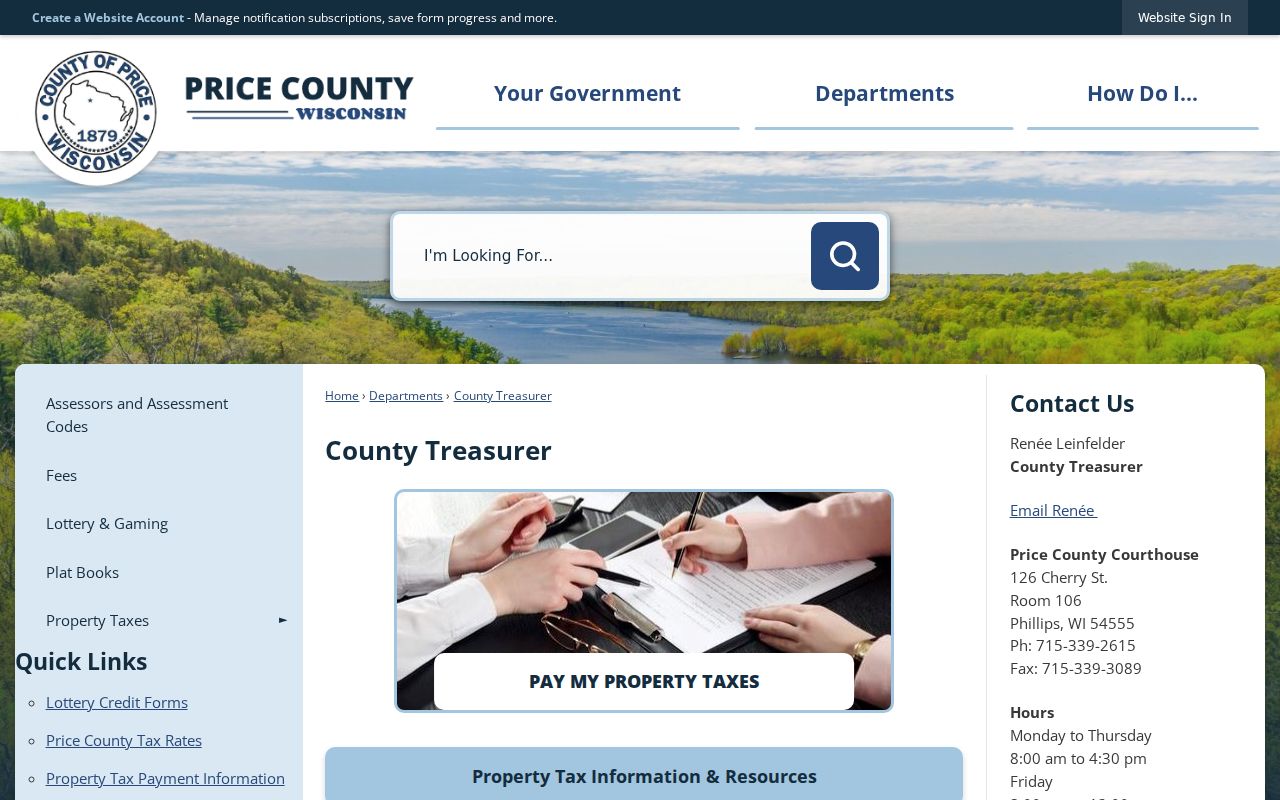
Keep the printed bill or receipt whenever you need to document a payment or balance.
The nightly refresh is handy for checking a recently paid amount. For actual proof, hold onto the dated receipt. Bill, balance and receipt each do different work. The bill lists charges for a tax period. The balance reports what the server says is due. The receipt records a payment made. If a figure looks inconsistent, compare the parcel PIN and year printed on each document. Then ask the Treasurer to review the account.
Forest and Farm Classes in Price County Property Tax Records
Price County's assessment-code page goes well beyond homes and businesses. The local list includes productive forest, managed forest open and closed. It adds county forest, swamp, agricultural forest and exempt property. It also names zoning categories, special assessments, lake-district charges and even a failed lottery-credit entry. This vocabulary matters in a Northwoods county. Wooded or wet land may not be treated like a residential building lot.
Remember that a code is a classification, not a legal description or a market value. Read the assessment roll beside the parcel's mapped location and recorded description. A managed-forest label should be verified against the actual county account and program record. It should not be guessed from tree cover on a GIS map. The county assessment-code key supplies the local class and charge definitions.
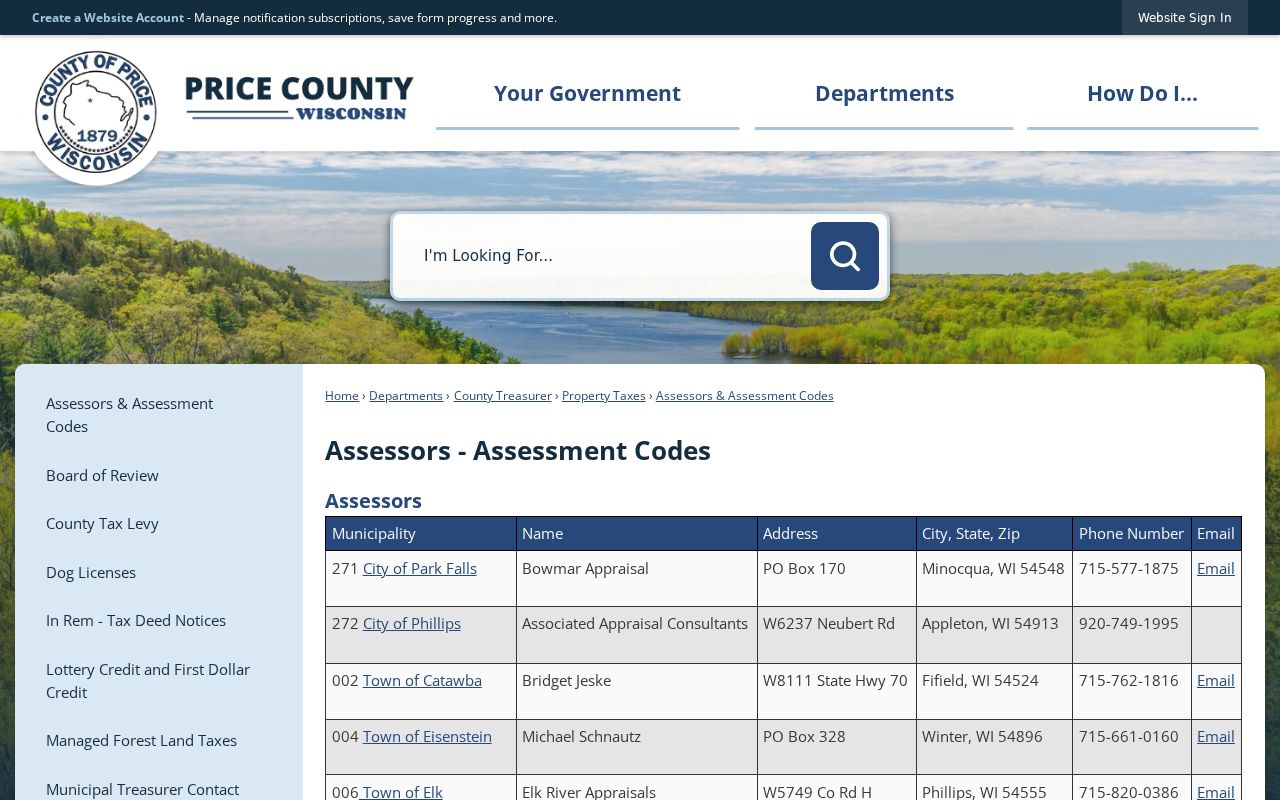
Check the code against the bill before comparing rural land with a house account.
The code list also separates class labels from charges and special districts. A parcel can carry an assessed-value category plus a separate lake-district or special-assessment line. Those entries do not mean the same thing. For any comparison, note the class, municipality or district, and tax year on each account. These distinctions make the property tax records genuinely useful. They explain why nearby land can carry different totals. The mapped landscape does not tell the full story.
Open Book and the Price County Property Tax Board of Review
Price County opens the annual review with an open-book session and then the Board of Review. The objection process reaches assessed value only. Bill totals and exemption questions fall outside it. Under Wis. Stat. §70.47(7)(a), the county requires a written objection supported by evidence. The current county notice sets filing steps and local dates. A generic statewide date may not apply.
Evidence carries the day. The parcel's own recent arm's-length sale is the strongest proof of value, with comparable arm's-length sales next. Keep sale documents, parcel details, and comparable properties organized. A tax statement shows what was charged, yet it cannot prove the assessed value wrong. Classification, exemption, and bill-calculation questions belong with the appropriate county office instead.
The Board of Review page gathers the objection form and the county's evidence guidance in one place.
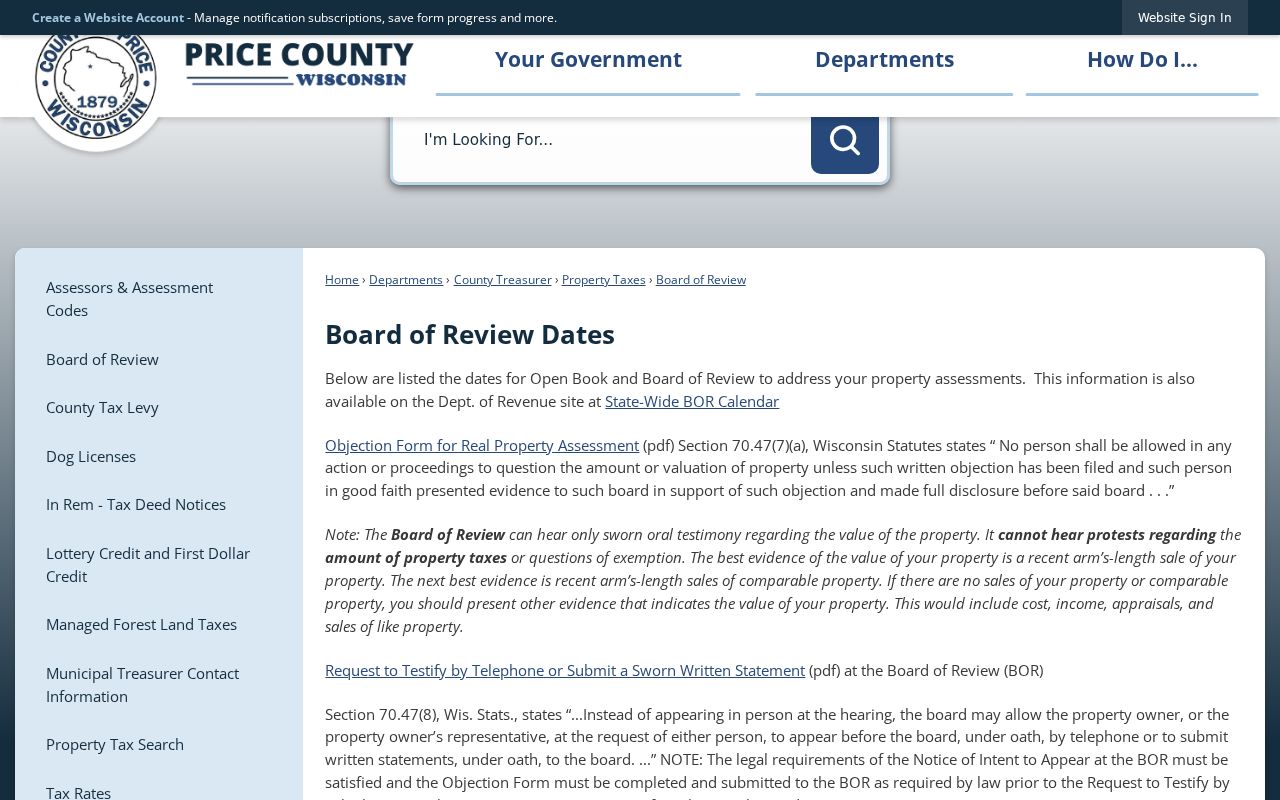
Start with the current county notice, which sets the open-book and objection procedure for the year at issue.
Price County's evidence guidance treats the parcel's own recent arm's-length sale as the clearest starting point. Without that sale, use comparable arm's-length sales. Include each sale date and parcel description so a reviewer can see why the properties match. The written objection matters under the cited statute. A tax-rate change alone proves nothing. Nor does a neighbor's bill. Check the county notice for the current meeting and filing instructions.
Wisconsin’s Five-Year Rule in Price County Property Tax Records
Wisconsin Department of Revenue guidance requires major assessment classes to sit within 10 percent of full value at least once every five years. That is a class-level measure. It tracks assessment level over time. It does not cap any single parcel's assessed value or force a fixed yearly increase.
For a value objection in Price County, the parcel's own recent arm's-length sale or comparable arm's-length sales carry more weight than a tax-rate comparison. Assessment ratios and market evidence belong to valuation review. Tax districts, credits, and charges explain the bill instead. Keeping those parts separate makes a question easier for the county to answer.
The five-year standard measures assessment performance across a class. It promises no review of every parcel in a given year. It sets no universal annual increase either. Price County property tax records still get tested parcel by parcel. Compare the roll entry with any sale evidence. The county's open-book notice then shows the current way to raise a valuation issue.
Special Charges and Tax-Deed Notices in Price County
Assessment-code materials cover special assessments, special charges, lake-district items, and lottery-credit treatment. These lines drive bills apart. Similar assessed values can still produce different bills. Read each line on the Treasurer's statement. Match the parcel to its own district rather than assuming a neighboring property carries the same charges.
The Treasurer also publishes in-rem tax-deed notices for properties with two-year delinquencies. A notice is a legal collection step. Read the official county material and confirm the parcel and status with the Treasurer. A general tax search summary cannot settle a deadline or a legal consequence.
Treat a delinquency notice as its own legal record. It is not an ordinary bill or receipt. Confirm the parcel description, owner, and tax years. The Treasurer can state the current status and the next record in the process. A general account display helps locate the parcel but cannot establish a legal deadline or prove a collection step finished.
Find a Tax Bill in Price County Property Tax Records
The Treasurer's public-access server links tax data to land and parcel records. Begin with a known address or tax ID. When the first query misses, run a separate search on the street name or owner. Verify the situs address and PIN first. Only then read the bill, the payment status, and any balance.
- Enter one search key, such as the house number, street, tax ID or last name.
- Open the account and confirm the parcel, tax year and mailing address.
- Print the bill, receipt or balance statement that matches the question.
- For delinquency or in-rem status, read the official notice and contact the Treasurer.
- Assessed value
- The value maintained in the county assessment roll.
- Tax bill
- The statement of charges, credits and payment status for an account.
- Special charge
- A district or parcel-specific amount listed apart from the base value.
- In-rem notice
- A county tax-deed notice tied to a delinquent parcel.
How to Challenge a Price County Assessment
The county's open-book and Board of Review materials explain the current objection process. Price County publishes the form and evidence rules itself. Its guidance cites Wis. Stat. §70.47(7)(a). A recent arm's-length sale of the subject property is the best evidence described there. Comparable arm's-length sales form the next useful set. Bring parcel facts and valuation evidence rather than a bare disagreement with the tax bill total.
Appeal window. Follow Price County’s current open-book and Board of Review notice for dates and filing steps. The research materials do not establish one standing countywide deadline, so verify the calendar before submitting an objection.